iPhone 18 Pro and iPhone Duo Launch
The $2,000 iPhone Is Here — Be Careful How Much You Spend on Your Next Phone
It’s official.
Apple has unveiled the new iPhone 18 Pro, iPhone 18 Pro Max and its first foldable iPhone, the iPhone Duo.
And while there’s plenty of impressive technology packed into Apple’s newest devices, there’s another number that caught our attention at Phone Doctors:
$1,999.
That’s the starting price of the new iPhone Duo.
The iPhone 18 Pro now starts at $1,199, while the iPhone 18 Pro Max starts at $1,299.
We’ve officially entered the era of the $2,000 smartphone.
At the same time, Apple has introduced a new leasing program that makes expensive devices look much more affordable on a monthly basis. Wireless carriers are also increasingly offering longer device-payment terms, with some plans stretching payments as far as four years.
At Phone Doctors, we love new technology. We’ve been repairing, selling and working with smartphones since 2004.
We’re excited to see what the iPhone Duo can do.
But we also think consumers need to be increasingly careful about something:
Don’t confuse being able to afford the monthly payment with being able to afford the phone.
Apple’s New Phones Are Impressive — And Expensive
There’s no question that Apple’s new lineup includes some impressive technology.
The iPhone 18 Pro and Pro Max bring Apple’s new A20 Pro processor, camera improvements including a variable-aperture 48MP main camera, better battery life and Apple’s latest AI features.
Then there’s the iPhone Duo.
Apple’s first foldable iPhone opens into a 7.6-inch display while still providing a 5.4-inch outer display for normal phone use. It supports multitasking across the larger display and will even support Apple Pencil.
It’s exciting technology.
But it’s also a $1,999 phone.
And that’s the starting price.
We’re not going to tell anyone that spending $2,000 on a smartphone is automatically a bad decision.
If you love technology, want the latest device and can comfortably afford it, there’s nothing wrong with buying one.
The problem begins when financing and leasing make a very expensive purchase feel inexpensive.
Stop Asking “What’s My Monthly Payment?”
This is something consumers have already experienced with cars.
A vehicle might cost $60,000, but the conversation quickly becomes:
“What monthly payment can you afford?”
We’re beginning to see something similar with smartphones.
Instead of focusing on the actual price of the phone, we’re shown numbers like:
$34.99 per month.
$49.99 per month.
$57.99 per month.
Those numbers sound considerably more reasonable than $1,200, $1,500 or $2,000.
But changing the payment doesn’t change the value of the purchase.
A $2,000 phone is still a $2,000 phone.
Before agreeing to any financing or leasing program, we think consumers should temporarily ignore the monthly payment and ask themselves:
“Would I still buy this phone if I had to pay the full price today?”
You don’t necessarily have to pay cash.
Zero-percent financing can make financial sense.
But if the only reason a phone feels affordable is because the payments have been stretched over several years, it may be worth reconsidering the purchase.
Four Years Is a Long Time to Pay for a Phone
Some wireless carriers have started offering device-payment options extending as long as 48 months.
That’s four years.
Think about the smartphone you were using four years ago.
Now imagine receiving a bill for it this month.
That’s what consumers need to consider when looking at extremely long financing terms.
A lower monthly payment can certainly help with cash flow.
But stretching the cost of a rapidly depreciating piece of technology over four years creates another problem:
You can still owe money on a phone long after you want to replace it.
What happens if you want a different phone in two years?
What happens if you want to change carriers?
What happens if the phone is badly damaged?
What happens if your financial situation changes?
The $30 or $40 monthly payment that looked attractive when the phone was brand new may feel very different in Year 3.
Apple’s New Upgrade Program Adds Another Question: Do You Actually Own Your Phone?
Apple has also introduced Apple Upgrade, a new leasing program provided through Klarna.
And the word leasing is important.
This isn’t traditional financing where you make the final payment and automatically own the phone.
With Apple Upgrade, eligible customers can lease an iPhone for 12 or 24 months.
For example, Apple currently advertises the new iPhone Duo starting at $57.99 per month for 24 months through Apple Upgrade.
That certainly sounds more approachable than:
$1,999.
But there’s something consumers need to understand.
You’re leasing the phone.
At the end of the initial lease term, Apple’s program gives you several choices.
You can upgrade and return the phone.
You can leave the program and return the phone.
Or you can make an additional payment to purchase the device.
In other words, making all of your scheduled lease payments does not automatically mean the phone becomes yours.
That’s not necessarily bad.
Leasing can make sense for certain people.
If you’re someone who wants a new iPhone every year or two anyway, you may prefer leasing.
But understand the transaction you’re entering.
Financing a phone and leasing a phone are not the same thing.
Read the Terms Before You Lease
This is where we think consumers need to slow down.
Apple Upgrade has specific terms regarding early upgrades, ending a lease early, returning the device and the condition of the phone.
If you leave the program early, you can be responsible for the remaining lease payments.
When returning the phone, it needs to meet the required condition standards or you could face additional charges.
And if you ultimately decide that you want to keep the device, you’ll need to exercise the purchase option.
None of this means Apple’s program is unfair.
It means consumers should understand exactly what they’re agreeing to before looking only at the attractive monthly payment.
There’s a big psychological difference between saying:
“I’m buying a $2,000 iPhone.”
and
“It’s only $57.99 a month.”
Companies know that.
Consumers should know it too.
Maybe You Don’t Need a New Phone
There’s another option that doesn’t get nearly as much advertising:
Keep the phone you already have.
The smartphone industry survives by convincing us that a two- or three-year-old device is old.
But today’s smartphones are incredibly powerful.
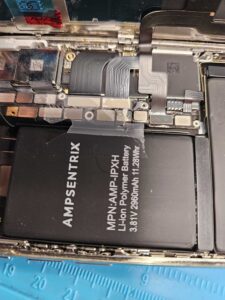
If your current iPhone works well except the battery doesn’t last as long as it used to, you might not need a new iPhone.
You might need a battery.
If your screen is cracked:
You might need a screen repair.
If the charging port isn’t working:
You might need a charging-port repair.
If the back glass is broken:
You might need a back-glass repair.
A repair costing a fraction of the price of a new flagship phone could potentially give your existing device another two or three years of useful life.
The More Phones Cost, the More Repair Makes Sense
This is something we believe consumers will increasingly recognize.
When flagship smartphones cost $600 or $700, replacing a damaged device might have made sense in many situations.
At $1,200, $1,500 and now $2,000, the economics change considerably.
Imagine buying an iPhone Duo for $1,999.
Two years later, the battery has degraded or something breaks.
If that device can be repaired and continue working for another two years, replacing the entire phone simply because it’s damaged may make very little financial sense.
As smartphones become more expensive, repair becomes more valuable.
And there’s another financial benefit that’s easy to overlook.
Once your phone is completely paid off, every additional month you keep using it is another month you aren’t making a device payment.
Keep a paid-off phone for another two years and you could potentially avoid thousands of dollars in unnecessary upgrades.
Don’t Go Into Debt Trying to Keep Up With Technology
This is the most important part of this conversation.
A smartphone is a tool.
It’s an amazing tool.
But it’s still a tool.
No smartphone is worth creating financial stress for your family.
You shouldn’t feel like you need a $2,000 iPhone because it’s the newest model.
You shouldn’t stretch a purchase over four years simply because that’s the only way the payment fits into your budget.
And you shouldn’t enter a lease without understanding that making monthly payments doesn’t necessarily mean you’ll own the device when those payments end.
There’s nothing wrong with buying an iPhone 18 Pro.
There’s nothing wrong with buying an iPhone 18 Pro Max.
And there’s nothing wrong with buying the new $1,999 iPhone Duo.
If you can comfortably afford it.
Our Simple Rule Before Buying a New Phone
Here’s something we’d encourage everyone to do before their next upgrade.
Ignore the monthly payment.
Look at the actual retail price.
Then ask yourself:
“If I had to pay the entire amount today, would I still think this phone was worth buying?”
If the answer is yes, great.
Then compare financing, leasing, trade-in offers and carrier promotions to determine the smartest way to acquire it.
But if the answer is no?
Maybe the $39, $49 or $59 monthly payment shouldn’t change your answer.
And before upgrading, ask one more question:
“What would it cost to repair the phone I already own?”
You might find that spending a couple hundred dollars — or considerably less for something like a battery — gives you everything you actually need.
Apple Isn’t the Problem — This Is an Industry-Wide Trend
We don’t want this to sound like we’re criticizing Apple simply for making an expensive phone.
Apple isn’t alone.
Samsung, Google and other manufacturers sell premium devices approaching laptop-level prices.
Wireless carriers increasingly rely on long-term financing, bill credits and trade-in promotions.
Subscriptions and leasing are becoming common throughout the technology industry.
There’s nothing inherently wrong with any of those things.
But companies need to be careful.
There comes a point where making products more expensive while making the monthly payment appear smaller can begin to damage customer trust.
Accessibility through financing isn’t the same thing as affordability.
That’s a distinction the technology industry shouldn’t forget.
Buy Smart. Understand the Agreement. And Repair When It Makes Sense.
We’re excited about the iPhone 18 Pro, iPhone 18 Pro Max and especially the new iPhone Duo.
We’ll undoubtedly see plenty of them come through Phone Doctors over the next several years.
But whether your next phone costs $500 or $2,000, our advice is the same:
Know the total price, not just the monthly payment.
Understand whether you’re buying, financing or leasing.
Know whether you’ll own the phone when your payments end.
Understand what happens if you want out of the agreement early.
And before spending thousands of dollars replacing a device, find out whether the phone you already own can be repaired.
The newest phone isn’t always the smartest financial decision.
Sometimes the best smartphone deal available is the one that’s already in your pocket.
What Do You Think?
Would you spend $1,999 on the new iPhone Duo?
Would you finance a smartphone for four years?
Would you consider leasing an iPhone knowing that you don’t automatically own the device at the end of the lease?
Or have smartphone prices finally reached the point where you’re planning to keep your current phone longer?
We’d love to hear what you think.
Phone Doctors has been helping customers repair and extend the life of their technology since 2004. From iPhones, Samsung Galaxy phones and Google Pixels to iPads, computers and game consoles, we believe one of the smartest technology purchases you can make is sometimes simply getting more life out of the device you already own.